
Blog Overview
Choosing the right timber for the Australian climate is a balance of durability, fire safety, and aesthetic appeal. This guide explores the best local and imported wood species to ensure your outdoor deck stands the test of time against the harsh Aussie sun.
Choosing the right decking material in Australia is a high-stakes decision. Between the scorching UV rays of Queensland, the humidity of the coast, and the strict bushfire regulations in rural areas, your timber choice determines whether your deck lasts thirty years or five.
This Jim’s Handyman guide breaks down the top timber species to help you find the perfect balance of durability, safety, and style.
The Top Australian Native Hardwoods
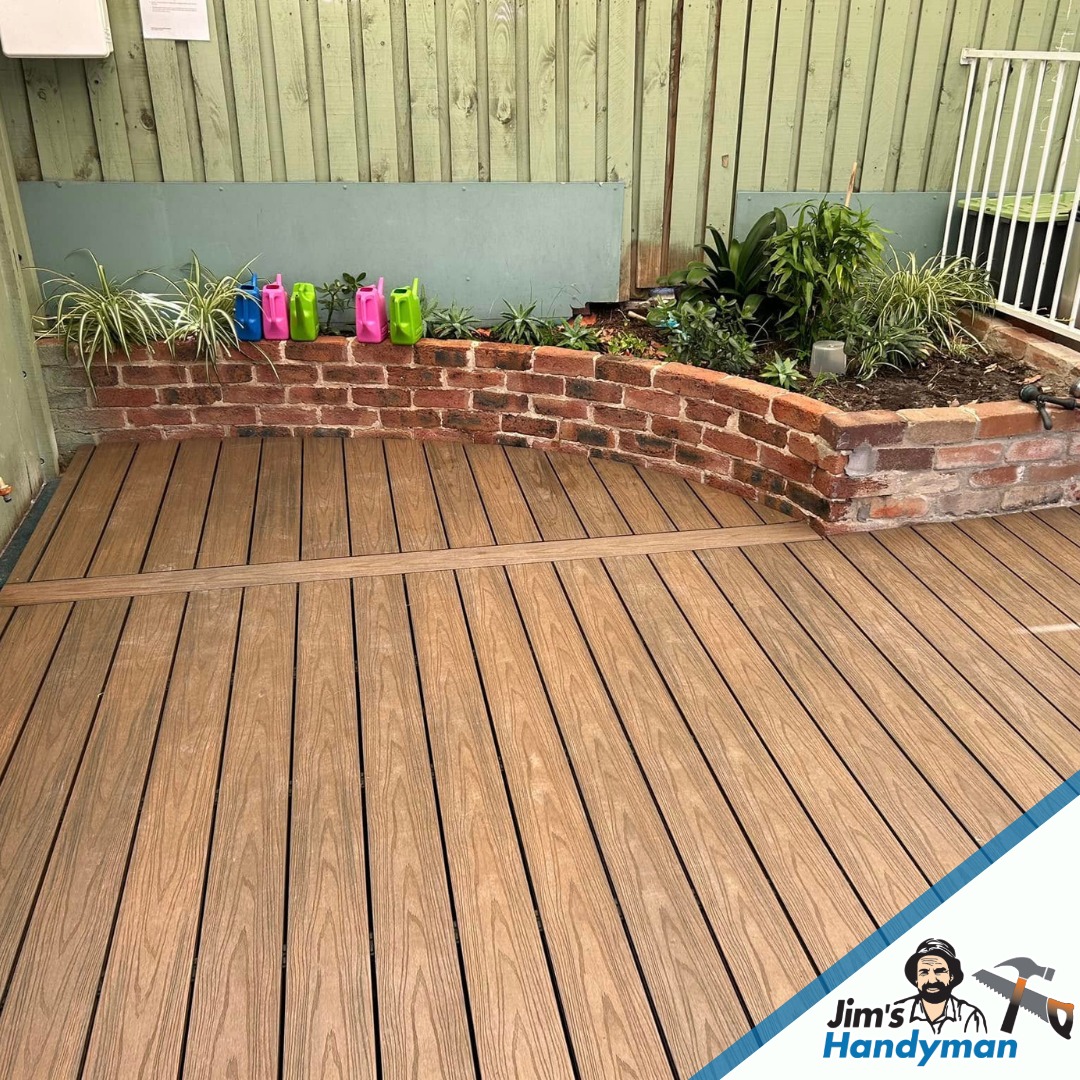
Native hardwoods are the gold standard for local conditions. Evolution has designed these trees to survive the exact environment your deck will live in, making them naturally resistant to the extremes of the Australian sun.
1. Spotted Gum
Spotted Gum is arguably the most popular premium decking timber in the country. It is a diverse species, grown primarily in coastal New South Wales and Queensland, providing a level of natural resilience that is hard to beat.
- Visual Appeal – It features a vibrant palette from light coffee-brown to deep chocolate, often with a unique “wavy” grain.
- Structural Integrity – Rated as Class 1 for above-ground use, it has a life expectancy of over 40 years when maintained correctly.
- Fire Safety – Naturally fire-resistant, it meets BAL-29 standards without requiring extra chemical treatment.
- Installation Notes – Because Spotted Gum is so dense, it has a low “tannin bleed” compared to other hardwoods. This means it won’t stain your pool coping or concrete as badly as Merbau might. However, its density requires pre-drilling for every single screw to avoid splitting.
2. Blackbutt
Blackbutt is a versatile, high-strength timber found in the coastal forests of New South Wales and Southern Queensland. It provides a much lighter aesthetic than most other hardwoods, which can help keep the deck surface slightly cooler underfoot during peak summer.
- Color Palette – Provides a modern, neutral look with honey-blond to pale brown tones.
- Hardness Rating – It features a very high Janka rating (around 9.1), making it highly resistant to physical indentation from furniture or foot traffic.
- Maintenance Needs – Takes stains and oils exceptionally well due to its consistent grain.
- Environmental Impact – Frequently available as plantation-grown timber, making it a “greener” choice for eco-conscious homeowners.
Blackbutt is prone to “surface checking” (small cracks) if left unsealed in the hot sun. It is vital to apply a high-quality UV-protective oil immediately after installation to lock in the moisture and prevent the fibers from separating.
3. Ironbark (Red or Grey)
If you want a deck that is virtually indestructible, Ironbark is the definitive answer. It is one of the densest and heaviest timbers in the world, often used in heavy civil engineering projects.
- Unmatched Lifespan – These boards can last 40 to 50 years even in harsh conditions.
- Natural Protection – It is naturally toxic to termites and highly resistant to lyctid borers.
- Physical Weight – Extremely heavy; this timber does not float and requires a very sturdy sub-frame to support the sheer mass of the wood.
- Tool Wear – It is notoriously difficult to cut and drill. You will likely go through several high-quality drill bits during a single installation.
Ironbark is the “heavy-duty” choice for Australians. It is commonly used for public wharves and bridges, so it can easily handle the demands of a high-traffic backyard entertaining area. It is also less prone to deck and other building maintenance.
Popular Imported and Softwood Options

While natives are excellent, many Australians opt for imports or treated softwoods to manage costs or achieve specific color goals.
1. Merbau (Kwila)
Merbau is the most common decking timber sold in Australia. While it is imported from Southeast Asia and Papua New Guinea, its price point and durability make it a staple in local backyards.
- Price Point – Usually more affordable than premium Australian natives like Spotted Gum.
- Durability – Class 1 durability with excellent resistance to termites and rot.
- The Tannin Issue – Merbau is famous for its high tannin content. When it gets wet for the first few months, it “bleeds” a dark red ink that can permanently stain tiles, pavers, and render.
- Handling – Many professionals recommend “washing” the timber with a specialized deck cleaner multiple times to strip the tannins before applying the final seal.
2. Treated Pine (Radiata Pine)
Treated Pine is the most budget-friendly option on the market. It is a softwood pressure-treated with chemicals (usually Copper Chrome Arsenate or ACQ) to prevent rot and insect attack.
- Economics – Often half the price of hardwood per lineal meter.
- Versatility – Because it is naturally light and porous, you can stain it to look like almost any wood species.
- Lifespan Expectancy – Much lower than hardwoods; expect 10–15 years before the boards begin to significantly degrade or lose structural integrity.
- Surface Strength – It is much softer than hardwood, meaning it is easily scratched by pet claws, high heels, or moving heavy furniture.
Treated pine is perfect for low-budget renovations or as a sub-frame material, but it requires the most consistent maintenance (cleaning and resealing) to prevent the wood from warping, twisting, or “cupping.”
Essential Considerations for the Australian Climate
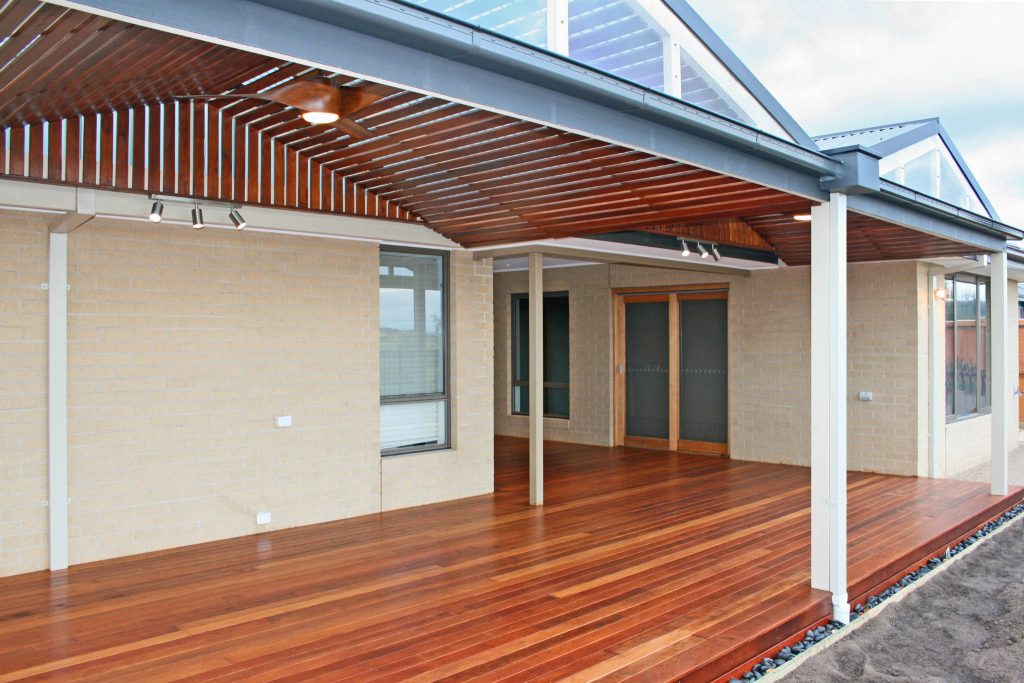
Selecting the species is only half the battle. You must also consider how your specific location impacts the wood over its lifetime.
Bushfire Attack Levels (BAL)
In Australia, building regulations dictate what you can use if you live in a bushfire-prone area.
- BAL-Low to BAL-19 – Most hardwoods and even some treated pines (with fire retardant) are generally acceptable.
- BAL-29 to BAL-40 – You are restricted to specific “fire-resisting” hardwoods like Spotted Gum, Blackbutt, or Red Ironbark.
- BAL-FZ (Flame Zone) – Timber decking is usually not permitted at all; you must look at non-combustible materials like fiber cement or aluminium.
Coastal vs. Inland Locations
If you live within 5km of the ocean, salt spray will corrode your fixings before it destroys your wood. For coastal decks, you must use 316-grade stainless steel screws. Galvanised screws will rust and cause “nail sickness,” where the wood rots specifically around the rusted metal, causing boards to loosen or pop up entirely.
The UV Factor and Grey Out
The Australian sun is brutal on timber. UV rays break down the lignin in wood cells, causing the timber to lose its natural pigments and turn a silvery-grey.
- If you love the weathered look, you can leave hardwoods untreated, but they still require a clear sealer to prevent moisture from causing structural cracks.
- If you want to keep the rich color, you must use a pigmented oil. The pigment acts like “sunscreen” for your deck, blocking the UV rays from reaching the wood fibers.
Moisture and Drainage
A deck’s worst enemy is trapped water. Regardless of the timber species you choose, ensuring there is adequate ventilation beneath the deck is vital. Without airflow, the underside of the boards stays damp while the top dries in the sun, leading to extreme warping and rot from the bottom up.

Conclusion
The best timber for your project depends on your specific BAL rating, budget, and how much maintenance you’re willing to perform. For longevity and safety, Australian natives like Spotted Gum and Blackbutt remain the top choices.
Ready to build your dream outdoor space? At Jim’s Handyman, we specialise in professional deck installation and repairs. Whether you need a brand-new hardwood deck or your existing timber needs a professional restoration, our team has the expertise to get the job done right.
Frequently Asked Questions
Which decking timber is best for bushfire-prone areas?
Australian hardwoods like Spotted Gum and Blackbutt are the top choices for high-risk zones. They possess natural fire-resisting properties and are often compliant with Bushfire Attack Level (BAL) 29 standards without requiring additional chemical treatments.
How often should I oil or seal my timber deck?
To keep your deck looking its best and prevent the wood from drying out, you should aim to oil it every 6 to 12 months. Decks in full sun or coastal areas with salt spray may require more frequent attention than those in shaded, inland locations.
What is “tannin bleeding” and which woods do it most?
Tannin bleeding is when the natural oils in the wood leach out after rain, often leaving dark stains on surrounding concrete or tiles. Merbau is the most notorious for this, while native Australian species like Spotted Gum have significantly lower tannin levels.
Can I use Treated Pine for the entire deck structure?
While Treated Pine is a popular and cost-effective choice for the sub-frame (the joists and bearers) because it resists rot and termites, many homeowners prefer using a more durable hardwood for the surface boards to better handle foot traffic and UV exposure.
How do I prevent my deck boards from warping or cupping?
Warping is usually caused by poor ventilation or incorrect spacing. Ensure your deck has adequate airflow underneath and that you leave a 3mm to 5mm gap between boards during installation to allow the timber to expand and contract with the weather.