
Blog Overview
Choosing the right carport style comes down to structure, roof design, drainage, and how well it integrates with your home. This guide explains the practical decisions that determine whether a carport actually works long-term.
Choosing a carport isn’t just about adding cover for your vehicle. The wrong style can cause drainage issues, look visually disconnected from your home, or fail to meet long-term needs. The right one, however, improves functionality, protects assets, and integrates cleanly with your existing structure.
This Jim’s Handyman guide focuses on the key structural and design decisions that actually matter when selecting a carport style.
Match the Carport to Your Home’s Architecture
A carport should visually belong to the house. This starts with roof shape, pitch, and proportions — not decorative details.
- Homes with simple, modern geometry suit flatter rooflines and minimal framing.
- Homes with visible roof pitch and eaves generally require a pitched or gable carport to avoid looking mismatched.
- Older or character homes often need deeper roof overhangs and thicker posts to feel structurally balanced.
Ignoring architectural compatibility is one of the most common mistakes in carport installations.
Attached vs Freestanding: Structural and Practical Differences

Before choosing a style, determine whether your carport should be attached to the house or freestanding, as this decision affects engineering, drainage, usable space, and building maintenance later.
Attached carports:
- Share structural loads with the existing building
- Require careful flashing and waterproofing
- Offer convenient, weather-protected access
- Are visually cleaner when designed correctly
Freestanding carports:
- Carry their own structural loads
- Allow more flexibility in size and placement
- Can be positioned closer to boundaries (subject to regulations)
- Are easier to modify or extend in the future
The choice should be based on site layout, council constraints, and how permanent you want the structure to be.
Choose a Roof Style That Balances Looks and Performance
This is the most critical design decision. Roof style determines water management, wind resistance, ceiling clearance, and how well the carport visually integrates with the home.
Flat Roof Carports
Flat roofs are commonly chosen for modern homes, but they are rarely truly flat. They rely on a subtle fall to direct water to one side.
Best suited for:
- Modern and minimalist homes
- Sites with height restrictions
- Side-yard or narrow access areas
Key considerations:
- Drainage must be precisely designed
- Poor falls can lead to water pooling
- Requires high-quality waterproofing membranes
- Less forgiving in heavy rainfall zones
Flat roofs look clean but demand accurate installation. Small construction errors can cause long-term issues.
Skillion (Single-Slope) Roof Carports
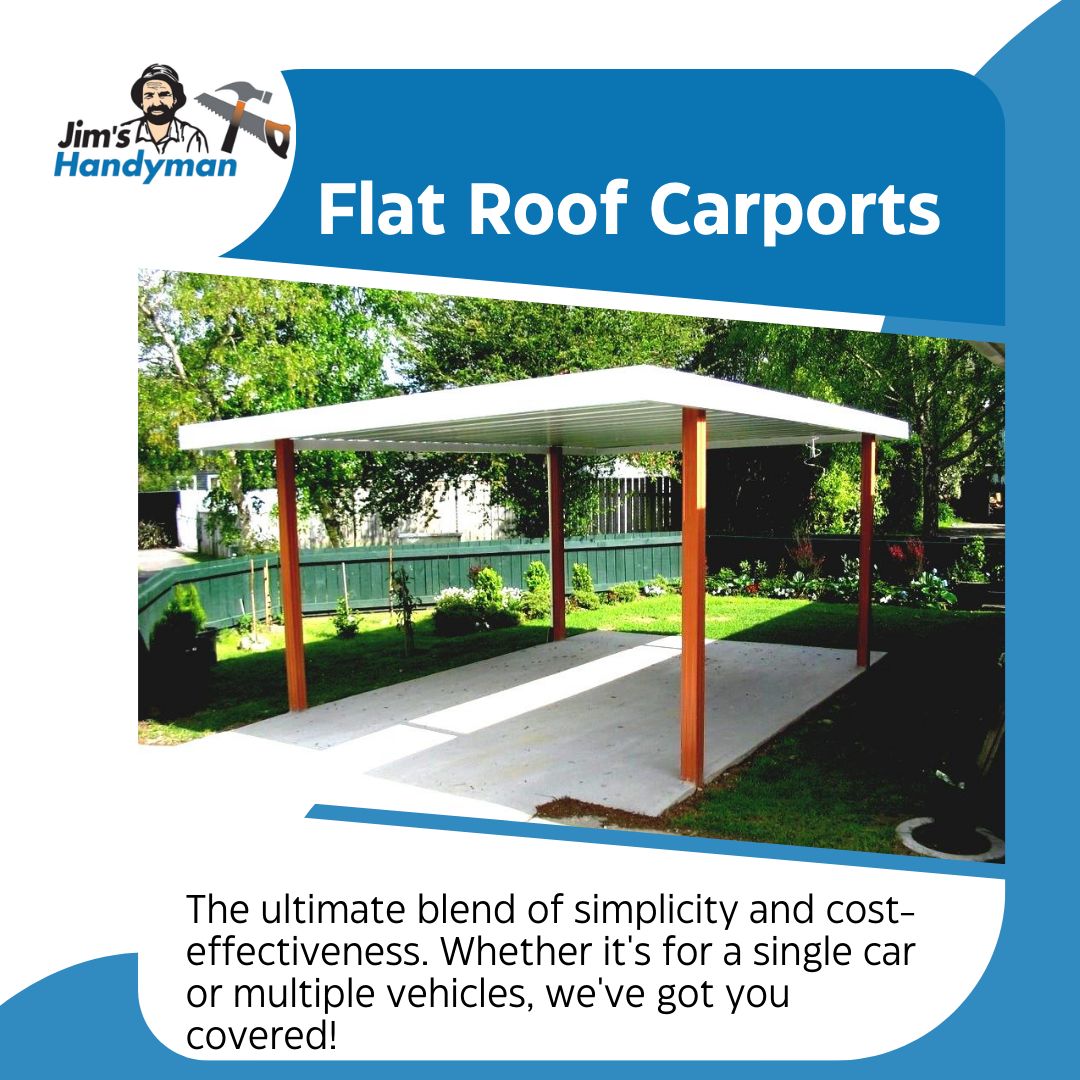
Skillion roofs slope in one direction and are widely used in both attached and freestanding carport designs. They provide a simple, controlled drainage path.
Best suited for:
- Attached carports
- Modern and contemporary homes
- Sites where water needs to drain away from the house
Key considerations:
- Runoff direction must be carefully planned
- Guttering placement is critical
- Visual balance depends on correct proportions
- Boundary drainage compliance must be checked
Skillion roofs are practical and versatile, but poor orientation can cause drainage or visual issues.
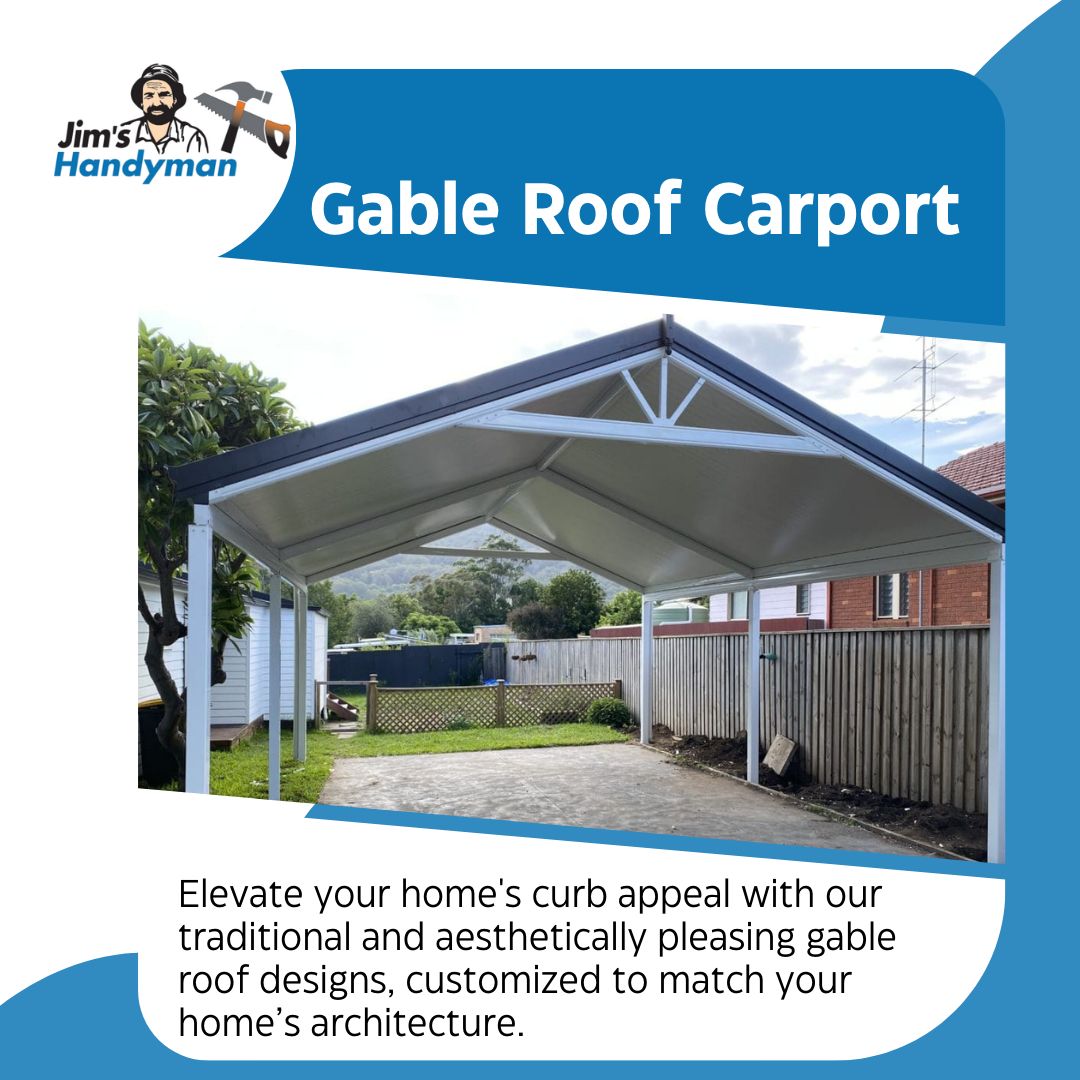
Gable Roof Carports
Gable roofs consist of two sloping sides that meet at a central ridge. They are one of the most common and adaptable roof styles.
Best suited for:
- Homes with existing pitched roofs
- Family homes and larger blocks
- Areas with moderate to high rainfall
Key considerations:
- Requires adequate width to look proportional
- More materials than single-slope roofs
- Ridge height affects vehicle clearance
- Must align visually with the main roof
Gable roofs perform reliably and integrate well when proportions are handled correctly.
Hip Roof Carports
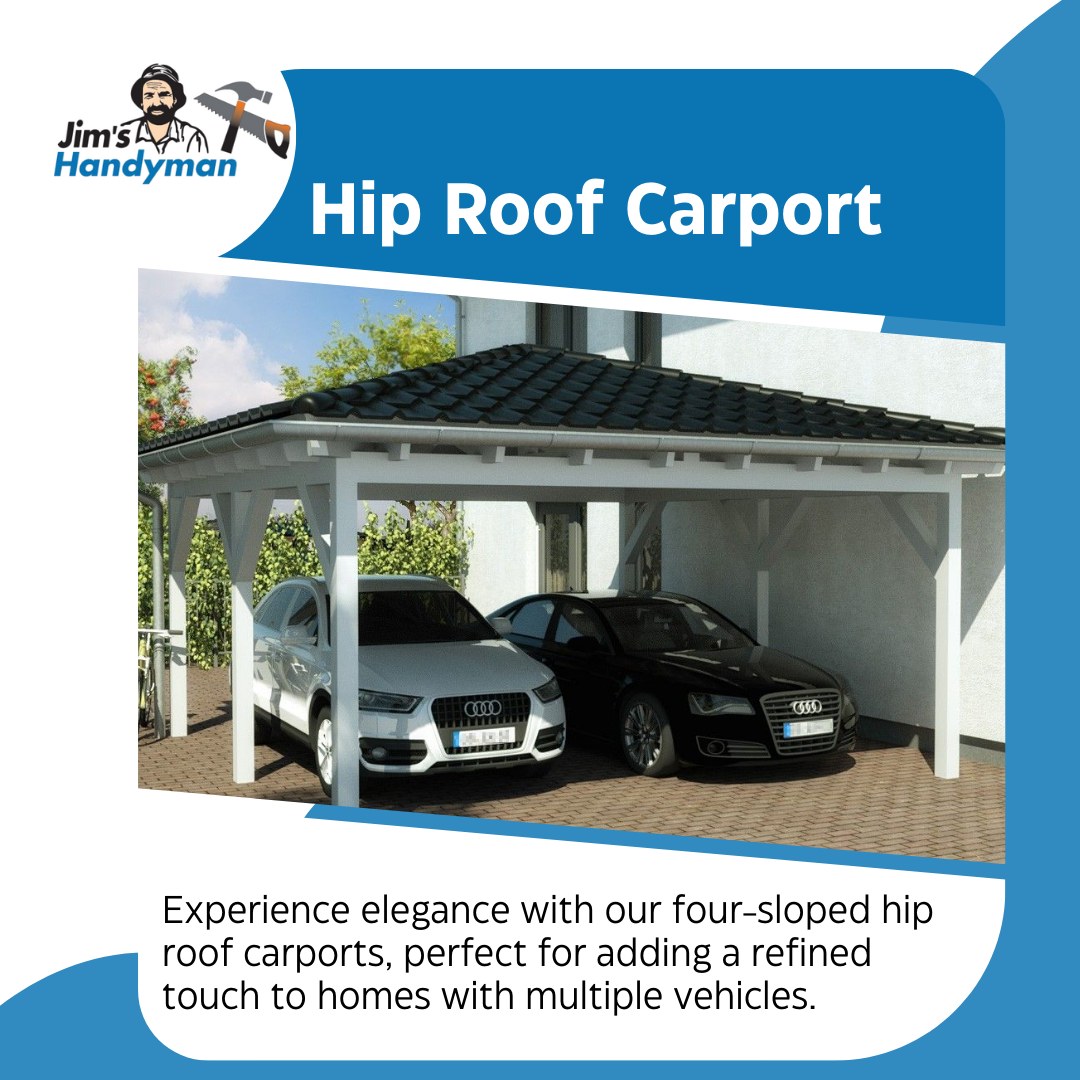
Hip roofs slope down on all sides and are known for their structural stability and balanced appearance.
Best suited for:
- Wind-exposed locations
- Double or larger carports
- Homes with existing hip roofs
Key considerations:
- More complex framing
- Slightly reduced internal height
- Higher material and labour costs
- Careful detailing required at corners
Hip roofs offer strength and symmetry but require more construction effort.
Dutch Gable Roof Carports
Dutch gable roofs combine a small gable section with a hipped roof structure, adding architectural detail.
Best suited for:
- Character or heritage-style homes
- Properties where visual consistency matters
- Larger structures needing added roof interest
Key considerations:
- Increased construction complexity
- Higher cost than standard gable or hip roofs
- Primarily aesthetic rather than functional
- Requires careful proportioning
Dutch gables add character but are best chosen for architectural reasons, not necessity.
Curved Roof Carports
Curved roofs use arched framing to create a smooth, continuous roofline without sharp angles.
Best suited for:
- Contemporary or architectural homes
- Coastal or high-wind environments
- Freestanding carport designs
Key considerations:
- Limited compatibility with attached structures
- Custom fabrication requirements
- Strong visual impact
- Higher upfront cost
Curved roofs perform well in harsh conditions but suit only specific home styles.
Butterfly Roof Carports
Butterfly roofs slope inward toward a central gutter, forming an inverted gable shape.
Best suited for:
- Architectural homes
- Sustainable designs with water collection
- Bespoke or custom builds
Key considerations:
- Central drainage must be meticulously designed
- Higher maintenance risk if gutters block
- Not suited to standard residential builds
- Requires professional engineering input
Butterfly roofs are visually striking but technically demanding.
Cantilevered Carports
Cantilevered carports are supported from one side only, removing the need for front posts.
Best suited for:
- Tight access areas
- Homes prioritising clean sightlines
- Single-vehicle coverage
Key considerations:
- Engineering requirements are critical
- Limited span capabilities
- Higher structural costs
- Not ideal for future expansion
Cantilevered designs improve access but require precise structural planning.
Pergola or Louvre-Style Carports
Pergola or louvre-style roofs provide partial cover rather than full weather protection.
Best suited for:
- Mild climates
- Multi-use outdoor areas
- Secondary parking spaces
Key considerations:
- Limited rain and hail protection
- Not suitable for all vehicle insurance requirements
- Moving parts increase maintenance
- Less effective for long-term vehicle protection
These structures prioritise airflow and flexibility over full protection.
Conclusion
Choosing the best carport style requires understanding roof performance, drainage behaviour, structural limits, and long-term use. Roof style is not an aesthetic afterthought — it determines whether the carport works at all.
If you want professional guidance and correct installation, Jim’s Handyman provides expert carport installation services. Our local handymen assess your site, recommend the right roof style, and build carports that are compliant, durable, and suited to your home — not just visually, but structurally.
Frequently Asked Questions (FAQ)
What matters most when choosing a carport style?
Roof design. It affects drainage, clearance, wind performance, and how well the carport functions over time.
Is an attached or freestanding carport better?
It depends on site layout and regulations. Attached carports offer convenience, while freestanding carports provide more flexibility.
Which roof style handles rain best?
Gable and hip roofs generally perform best in moderate to high rainfall areas.
Are flat roof carports reliable?
Yes, if drainage and waterproofing are designed correctly. They are less forgiving of installation errors.
Do carports need council approval?
Often, yes. Requirements depend on size, height, setbacks, and whether the carport is attached or freestanding.